
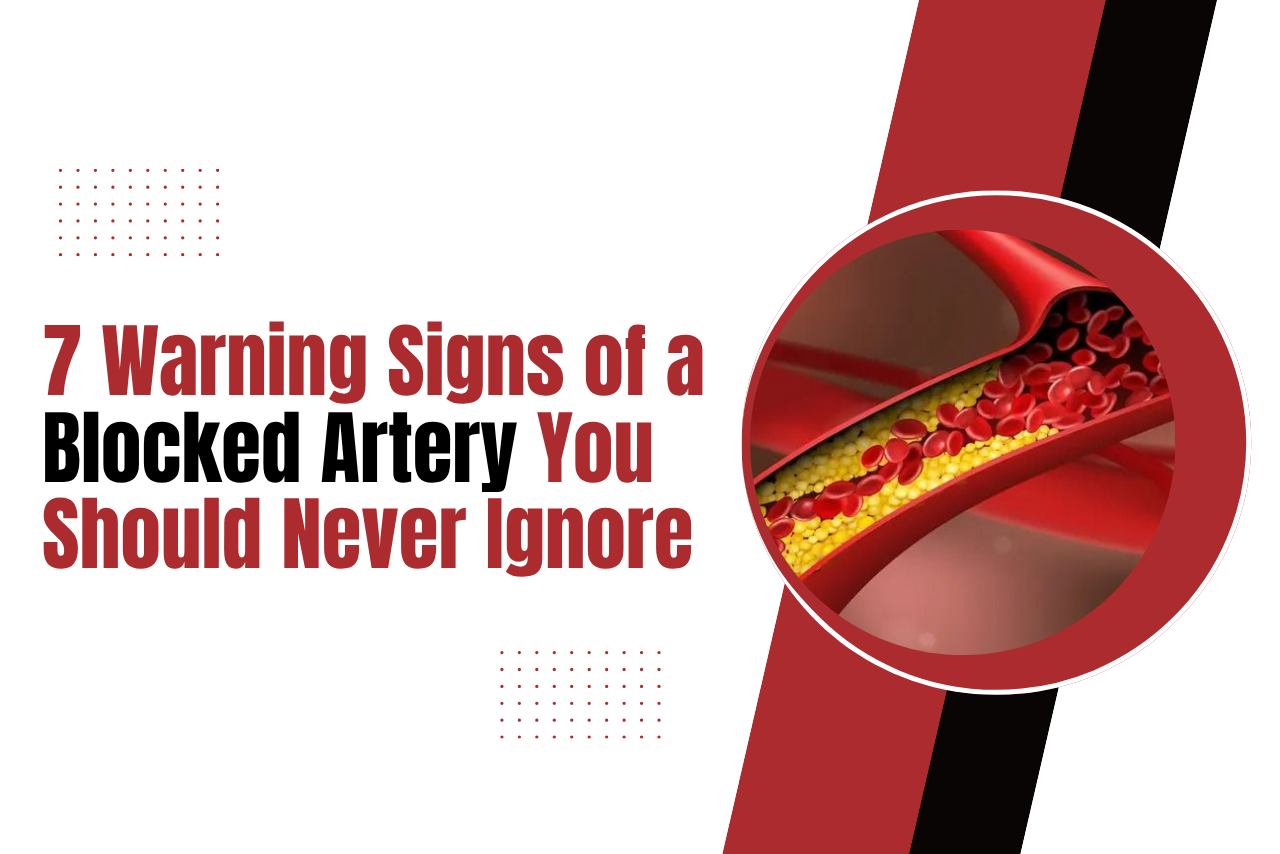
Blocked arteries reduce blood flow to the heart and other vital organs, increasing the risk of heart attack and stroke. Early warning signs include chest discomfort, shortness of breath, unusual fatigue, pain in the arm or jaw, and dizziness symptoms that should be evaluated promptly and never ignored.
Dr. Kiran Narang, an experienced interventional cardiologist in Mumbai, says,
“Most patients I see in the cath lab had warning signs months before their angioplasty. Chest discomfort during a walk, breathlessness on the stairs, fatigue they couldn’t explain. These aren’t signs of getting older. The artery is telling you something.”
Here’s what your body might be telling you:
The 7 warning signs
Coronary arteries narrow as plaque builds along the walls. Symptoms usually appear only once the blockage crosses 70%, which is why catching them early matters.
The signs to watch for:
Chest pain or pressure (angina)
A tight or squeezing feeling in the chest during exertion or stress, which settles with rest.
Shortness of breath
Trouble breathing during routine activity (climbing stairs, walking briskly) when the same effort felt easy a few months back.
Pain radiating to the arm, jaw, or back
Discomfort moving from the chest to the left arm, shoulder, jaw, or upper back a classic cardiac signal that’s still missed every day.
Unexplained fatigue
Feeling drained for no clear reason, more common in women, often pointing to reduced blood flow to the heart.
Irregular or racing heartbeat
Palpitations or skipped beats with no obvious trigger, sometimes the first hint of restricted blood flow.
Swelling in the legs or ankles
Fluid pooling in the lower limbs, often dismissed as a long day on your feet, can signal the heart struggling to pump efficiently.
Cold sweats, nausea, or dizziness
Especially when paired with chest discomfort these are often the under-reported signals that precede a cardiac event.
Cardiovascular disease is the leading cause of death globally, with nearly 17.9 million deaths every year. Catching these signals early is one of the few things that genuinely shifts that number.
Concerned about your heart health? Book a consultation for expert evaluation and personalized cardiac care.
Worth knowing before you brush it off:
Who Is Most at Risk of Developing Coronary Artery Disease Early?
Some people develop arterial blockages much earlier than others. Indian patients, in particular, tend to develop coronary artery disease nearly a decade earlier than Western populations.
Risk Factor | Risk Level | Onset Age | Action Needed |
Diabetes | Very High | 35+ | Annual cardiac screening |
Hypertension | High | 40+ | BP monitoring + ECG |
Family history | High | 30+ | Early lipid profile |
Smoking | Very High | Any age | Immediate cessation + screening |
Key risk groups include:
Adults with diabetes or hypertension
Both conditions damage artery walls quietly, long before any symptoms appear.
Smokers and ex-smokers
Tobacco speeds up plaque buildup and stiffens the vessels.
Strong family history
A parent or sibling with early heart disease roughly doubles your own risk.
Sedentary lifestyle with high cholesterol
The two together narrow arteries quietly over decades.
17.9 million people die from cardiovascular disease every year. That number doesn’t move because of new drugs or fancier stents. It moves when patients walk in earlier.
Why choose Dr. Kiran Narang ?
Dr. Kiran Narang is a leading interventional cardiologist in Mumbai with over 12 years in clinical medicine and 8+ years in cardiology. He has performed roughly 5,000 angiograms and 1,500 angioplasties, including complex multi-vessel cases and emergency interventions. His practice uses radial-access techniques where possible for faster recovery, follows ESC and ACC guidelines, and prioritises a calm, patient-first consultation style.
FAQ’s
Can a blocked artery be treated without surgery?
Yes. Mild to moderate blockages are managed with medication, lifestyle changes, and angioplasty with stenting where appropriate.
At what age should I get my heart checked?
Adults with diabetes, hypertension, or a family history should start screening at 30. Others by 40.
Is chest pain always a sign of a blocked artery?
No. But any new, exertion-linked, or radiating chest pain should be checked by a cardiologist promptly.
How long does an angioplasty take?
A typical angioplasty takes 30 to 90 minutes, with most patients discharged within 24 to 48 hours.
References
- World Health Organization,Cardiovascular Diseases (CVDs)
- Indian Heart Association,Why Indians and South Asians Are at Higher Risk