
The early signs of congestive heart failure include breathlessness during everyday activity, persistent fatigue, swelling in the ankles or legs, difficulty breathing while lying flat, and sudden weight gain from fluid retention. These symptoms usually develop gradually and are easy to mistake for normal ageing, stress, or reduced fitness, which is why heart failure is often diagnosed only after it has already progressed.
At Dr. Kiran Narang’s clinic in Marol, Andheri East, congestive heart failure is one of the conditions most often diagnosed later than it should be, not because it is rare, but because its early signs closely resemble ordinary tiredness and ageing. This article covers what congestive heart failure is, the early symptoms to watch for, and when a cardiology consultation is warranted.
What Is Congestive Heart Failure?
Congestive heart failure does not mean the heart has stopped working. It means the heart muscle has become too weak or too stiff to pump blood efficiently. As a result, blood and fluid begin to back up in the lungs, legs, and abdomen, which is where the term “congestive” comes from.
It is rarely the first cardiac problem to develop. In most cases, heart failure is the downstream result of years of untreated hypertension, a prior heart attack, or another underlying condition that has gradually weakened the heart muscle.
Early Warning Signs of Congestive Heart Failure
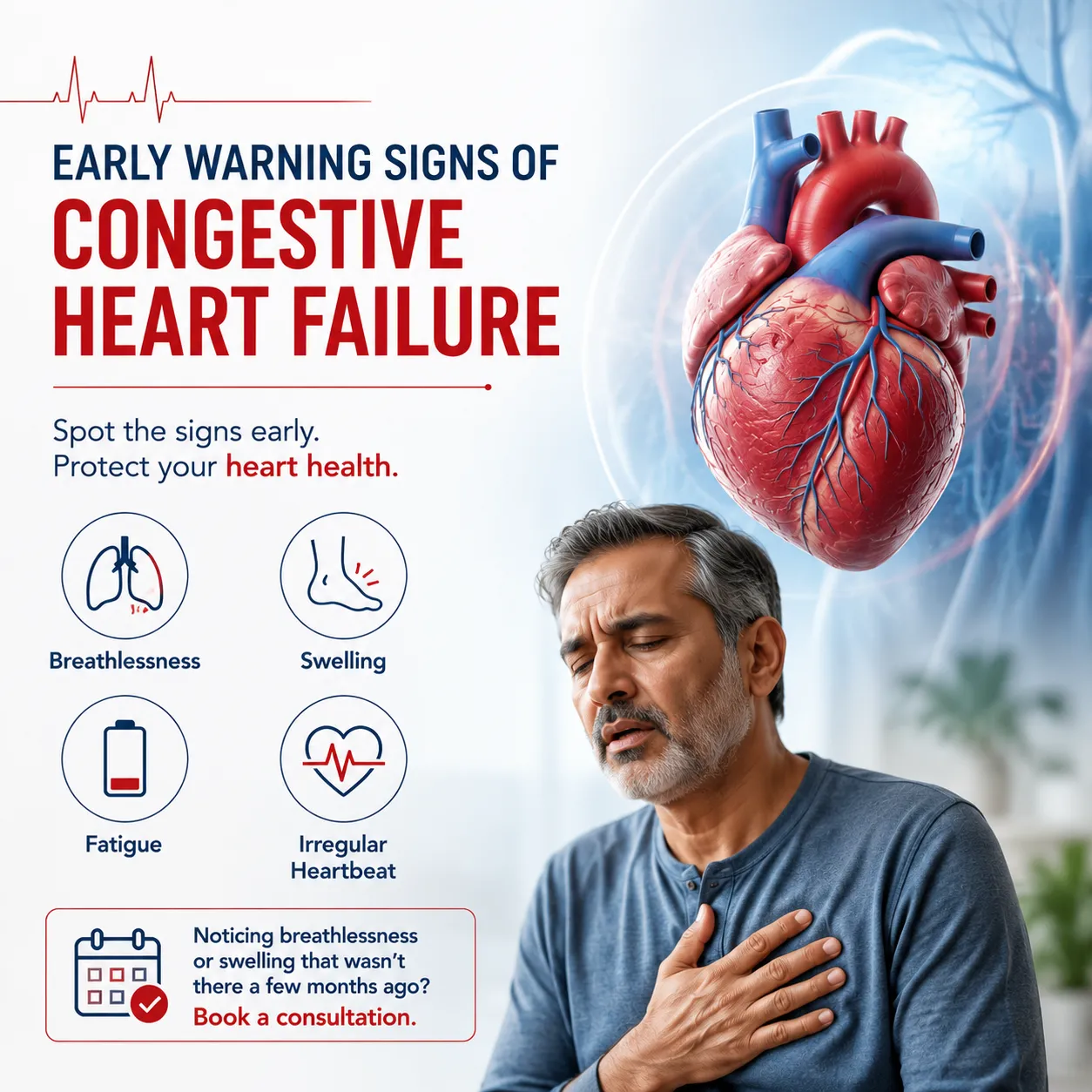
Individually, these symptoms are easy to dismiss. It is the pattern and persistence that matter, and a 2D echocardiogram is typically what confirms whether they are heart-related.
Breathing-Related Symptoms
- Breathlessness during activities that did not previously cause it, such as climbing stairs or walking briskly.
- Difficulty breathing while lying flat, requiring extra pillows to sleep comfortably. This is known as orthopnea and occurs because fluid redistributes toward the lungs when lying down.
- Waking up breathless during the night, known as paroxysmal nocturnal dyspnea, a more specific and concerning sign than daytime breathlessness alone.
- A persistent cough or wheeze, sometimes with white or blood-tinged mucus, caused by fluid accumulating in the lungs.
Fluid Retention Symptoms
Fluid retention, or edema, typically appears first in the ankles, feet, or legs, often noticed as tight shoes or sock marks by evening. A related indicator is rapid weight gain: 2 kg or more over two to three days usually reflects fluid retention rather than fat. Some patients also report bloating or fullness in the abdomen as fluid accumulates around the liver and intestines.
Fatigue, Appetite, and Heart Rhythm Changes
Fatigue associated with heart failure differs from ordinary tiredness. Patients often feel drained despite adequate rest, because the heart is not delivering sufficient oxygen-rich blood to the muscles. A rapid or irregular heartbeat frequently accompanies this, reflecting the heart’s attempt to compensate for reduced pumping efficiency. Reduced appetite or nausea can also occur as fluid buildup puts pressure on the digestive organs.
Noticing breathlessness or swelling that wasn't there a few months ago? Book a consultation to have it properly assessed.
Why These Symptoms Are Often Missed
Early heart failure symptoms overlap considerably with normal ageing, weight gain, and reduced fitness, which makes them easy to overlook. Certain groups are especially prone to delayed diagnosis:
- Women often present with fatigue and breathlessness rather than the more classic presentation, and are frequently attributed to stress or anxiety instead.
- Patients with diabetes may have blunted symptom perception due to nerve involvement, so breathlessness or swelling can be more advanced before it is noticed.
- Older adults often have fatigue and reduced exercise tolerance attributed to age rather than investigated further.
As a result, heart failure is frequently diagnosed only after a hospital admission for acute breathlessness, when it could have been identified and managed considerably earlier through routine evaluation.
How Heart Failure Progresses: Understanding the Stages
Cardiologists classify heart failure using the New York Heart Association (NYHA) functional classification, which measures how much the condition limits daily activity and helps guide treatment decisions.
| Class | Symptom Level | What It Looks Like |
| Class I | No limitation | Ordinary physical activity does not cause symptoms |
| Class II | Mild limitation | Comfortable at rest, but ordinary activity causes breathlessness or fatigue |
| Class III | Marked limitation | Comfortable at rest, but minimal activity causes symptoms |
| Class IV | Severe limitation | Symptoms present even at rest |
Most patients are in Class I or early Class II when symptoms first appear, which is when treatment is most effective at slowing or partly reversing progression. Delaying evaluation until symptoms reach Class III generally means the heart has already sustained more lasting damage. By Class III or IV, device-based support is often required alongside medication.
What Causes Congestive Heart Failure?
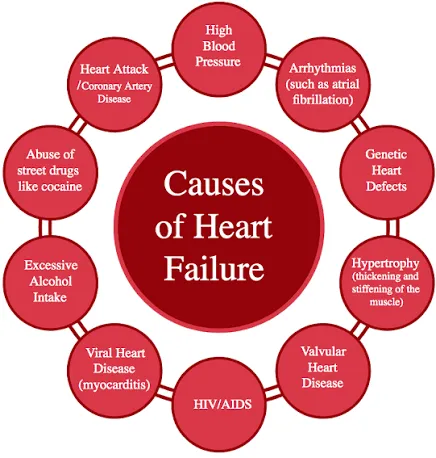
Heart failure is typically the end result of another cardiac condition left unmanaged over time.
Long-standing high blood pressure is among the most common contributors. Years of uncontrolled hypertension force the heart to work harder, which over time thickens and weakens the muscle. Coronary artery disease and prior heart attacks have a similar effect, since damaged heart muscle cannot pump as efficiently as healthy tissue. Identifying narrowed arteries early, sometimes treatable with angioplasty, can prevent this damage from occurring. This related read on 7 warning signs of a blocked artery outlines what to watch for.
Other contributors include cardiomyopathy, a disease of the heart muscle that can be genetic, viral, or linked to long-term alcohol use; leaking or narrowed heart valves, which force the heart to pump against abnormal pressure; and arrhythmias, where a persistently fast or irregular rhythm weakens the muscle if left uncorrected. Diabetes and obesity are also significant contributors, increasingly seen in younger patients.
How Is Congestive Heart Failure Diagnosed?
Diagnosis combines a clinical assessment with targeted tests. 2D echocardiography is the primary test, measuring ejection fraction, the percentage of blood the heart pumps out with each beat, and identifying whether the heart is weak, stiff, or structurally abnormal. Blood tests for BNP or NT-proBNP detect markers that rise when the heart is under strain, helping confirm or rule out heart failure. An ECG checks for rhythm abnormalities or signs of a past heart attack, and a chest X-ray can reveal fluid in the lungs or an enlarged heart. Where coronary artery disease is suspected as the underlying cause, angiography is typically the next step.
Persistent breathlessness or ankle swelling that hasn't been properly investigated? Schedule an assessment with Dr. Narang to get a clear diagnosis.
When to See a Cardiologist Urgently
Certain symptoms require same-day medical attention rather than a routine appointment:
- Severe breathlessness, even at rest
- Chest pain or tightness
- Coughing up pink or blood-tinged, frothy mucus
- Sudden weight gain of 2 kg or more within a few days
- Fainting or severe dizziness
- Rapid, irregular heartbeat accompanied by breathlessness
If any of these occur, they warrant emergency evaluation rather than waiting for the next available appointment.
Managing Early-Stage Heart Failure
Heart failure identified early, at Class I or II, generally responds well to treatment, and progression can often be slowed significantly or, in some cases, partly reversed.
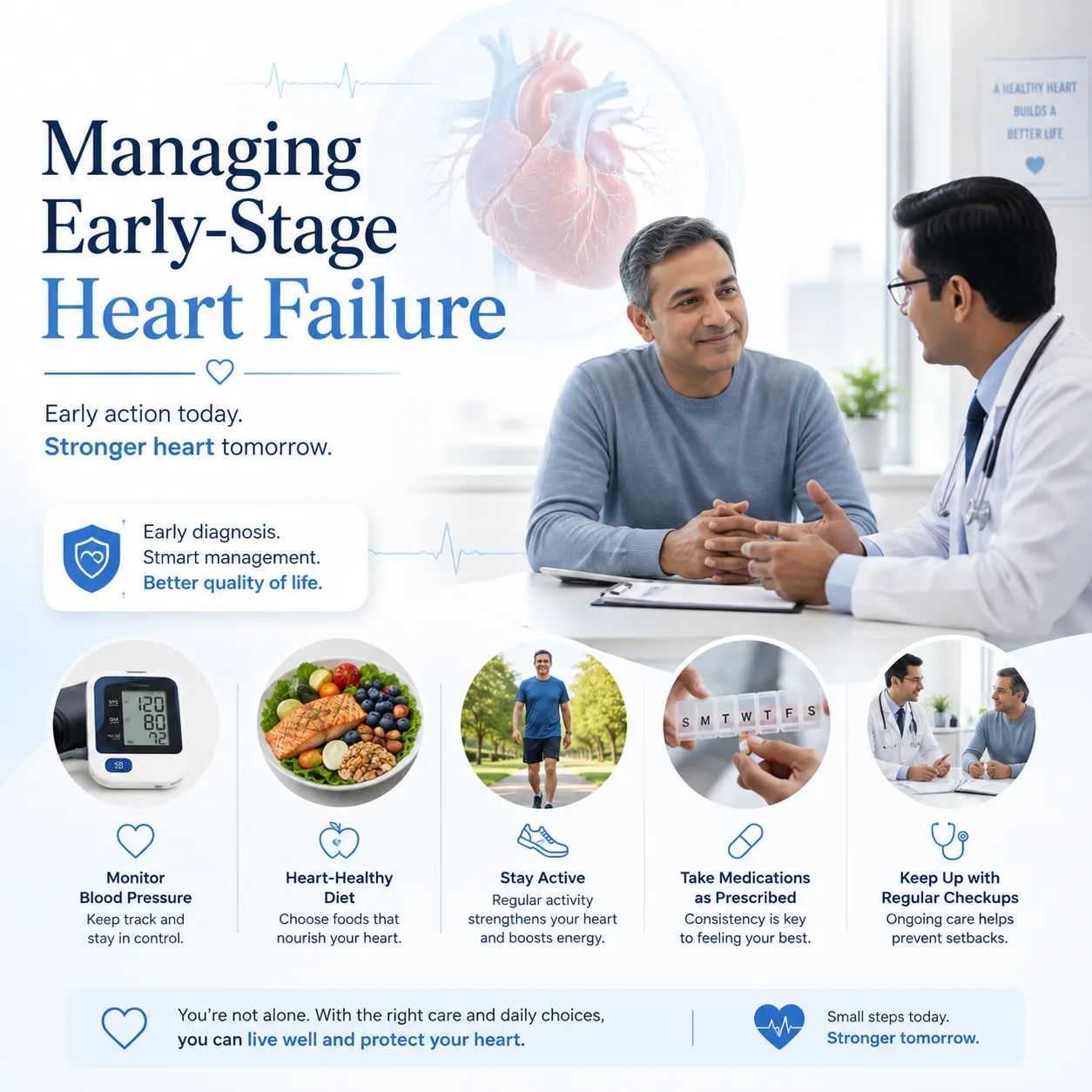
Medication forms the foundation of treatment: ACE inhibitors, ARBs, beta blockers, and diuretics are commonly used together to reduce the heart’s workload and clear excess fluid. Reducing sodium intake and monitoring fluid intake helps prevent overload, and daily weight checks are an effective way to catch fluid retention before it becomes symptomatic. Managing blood pressure, blood sugar, and cholesterol reduces further strain on the heart, and light to moderate exercise, under medical guidance, can improve cardiovascular capacity in most stable patients.
For some, particularly those with more advanced or rhythm-related heart failure, a pacemaker or specialised cardiac device becomes part of the treatment plan.
Treatment is monitored and adjusted over time based on the heart’s response, which is why regular follow-up is as important as the initial diagnosis. Where hypertension is a contributing factor, understanding how blood pressure is managed over the long term is relevant, as is this article on high blood pressure and your heart.
Why Choose Dr. Kiran Narang for Heart Failure Care in Mumbai?
Dr. Narang is an interventional cardiologist with over 12 years in clinical medicine (MBBS, MD, DM Cardiology, DNB Cardiology), with direct experience managing both the causes and progression of heart failure. Treatment decisions follow current ESC, ACC, and CSI guidelines, and the clinic offers ECG, 2D echocardiography, and angiography under one roof, reducing delays in diagnosis. Plans are personalised and staged, adjusted according to NYHA class, test results, and response to treatment over time. The clinic is located at Hridyarambh Clinic, Vasant Oasis, Makwana Road, Marol, Andheri East, Mumbai.
Book an appointment with Dr. Kiran Narang if breathlessness, swelling, or fatigue has been affecting daily routine.
FAQ’s
Is swelling in the feet always a sign of heart failure?
Not always. It can also result from prolonged standing, kidney issues, or medication side effects, but persistent swelling should be evaluated.
Can heart failure be cured?
Not always cured, but it can often be well controlled, and some causes, such as a treatable arrhythmia, can partly reverse it.
What is a normal ejection fraction?
Generally 55% to 70%. Heart failure is usually diagnosed when it drops below 40%, though some types occur with normal ejection fraction.
Is breathlessness while lying flat always heart-related?
It is a common heart failure sign, but lung conditions can also cause it, so it requires proper evaluation.
How soon should a doctor be seen after noticing these symptoms?
Persistent symptoms warrant a consultation within days. Severe or sudden symptoms require same-day emergency care.