
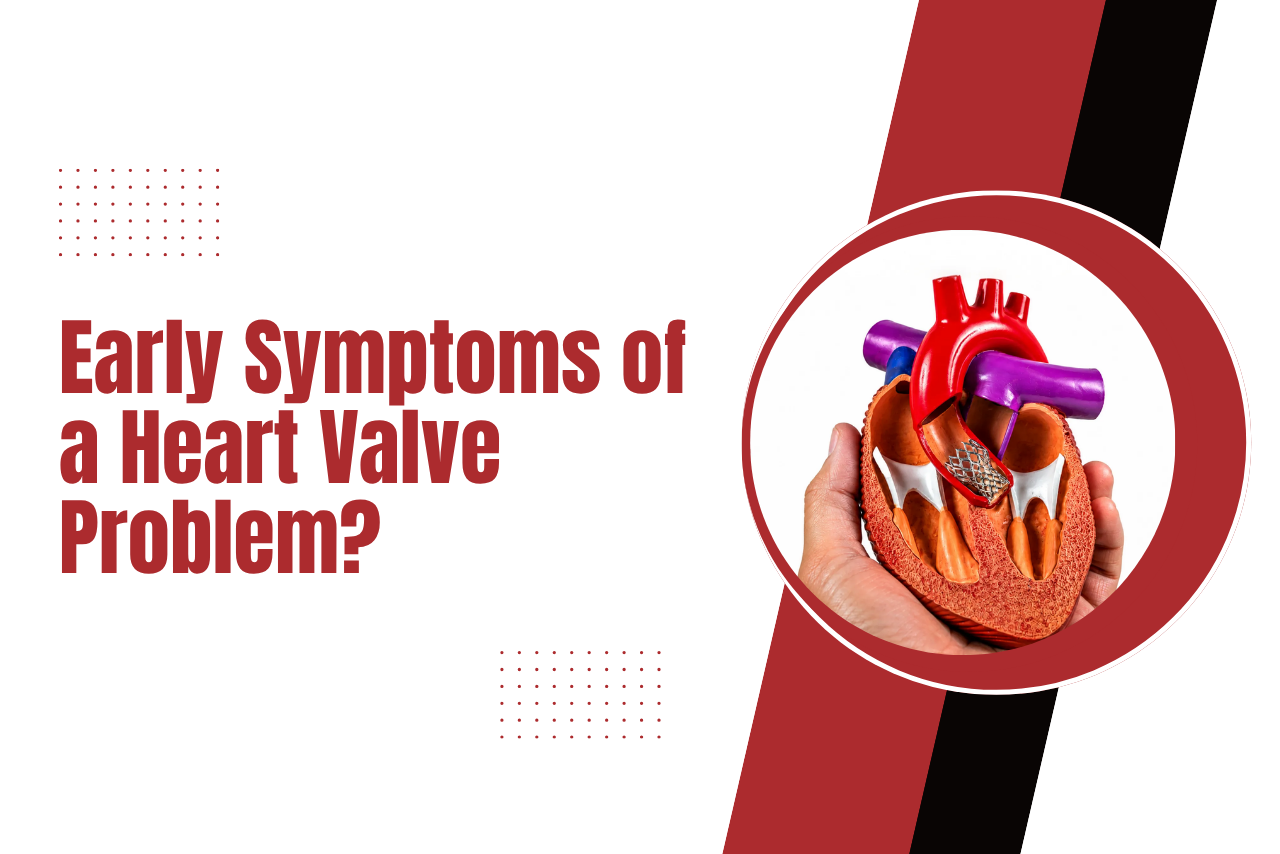
Many people with early heart valve problems have no symptoms at all. That’s actually what makes valve disease tricky to catch early. When subtle signs do start showing up, they tend to develop slowly rather than announce themselves clearly, unusual fatigue, mild breathlessness during physical activity, or a fluttering, irregular heartbeat known as palpitations. None of these scream heart problems on their own, which is exactly why they get dismissed as tiredness or getting older.
Dr. Kiran Narang, an experienced interventional cardiologist in Mumbai, says,”I see patients who tell me they’ve just been more tired than usual for months, or they get breathless on stairs that never used to bother them. They assume it’s age or fitness. Sometimes it’s the valve. An echocardiogram takes fifteen minutes and settles the question either way. Waiting doesn’t.”
The Early Warning Signs?
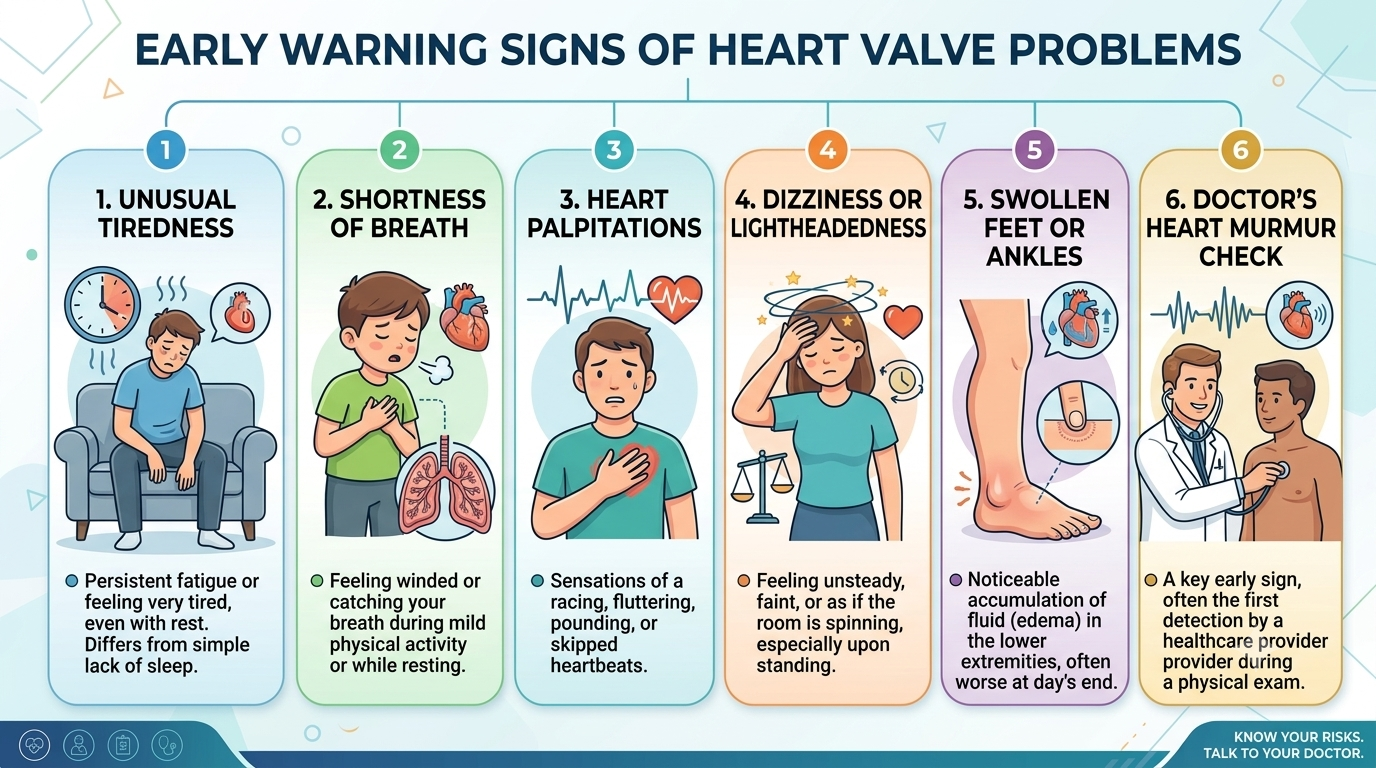
Heart valve problems can make the heart work harder than usual. In the beginning, the symptoms can be mild and easy to ignore.
- Feeling unusually tired: Getting tired even after doing simple daily activities.
- Shortness of breath: Feeling out of breath while walking, climbing stairs, or doing routine work.
- Palpitations: Feeling like your heart is racing, fluttering, or skipping a beat.
- Dizziness: Feeling lightheaded, especially during activity or when standing up quickly.
- Swollen feet or ankles: Swelling caused by fluid building up in the body.
- Heart murmur: Sometimes, a doctor may hear an unusual heartbeat during a routine checkup, even before you notice any symptoms.
The important thing: These symptoms can have many causes, but if they’re new, getting worse, or affecting your daily activities, it’s worth getting them checked. Early evaluation can help identify heart valve problems before they become more serious.Also can see our post on Heart Failure
Who Is Most at Risk of Developing Valve Problems?
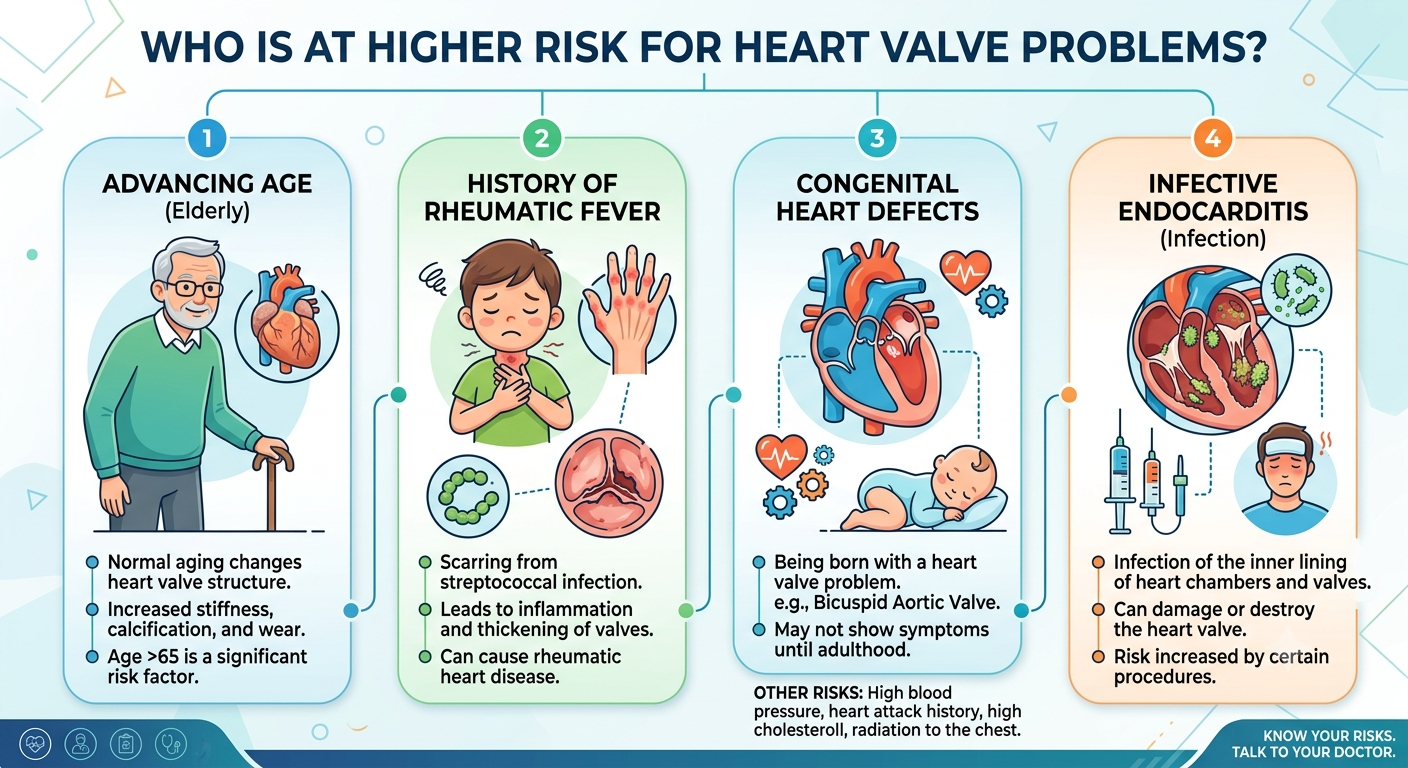
Valve disease isn’t distributed evenly. Certain groups develop it earlier or more often than the general population.
Adults with a history of rheumatic fever: Common in patients who had untreated strep infections in childhood, particularly in regions where rheumatic fever remains more prevalent.
Older adults: Valves naturally stiffen and calcify with age, which is why valve disease becomes considerably more common past 60.
People born with congenital heart defects: Some valve abnormalities are present from birth and may not cause symptoms until decades later.
Anyone who’s had a serious heart infection: Endocarditis can damage valve tissue permanently, even after the infection itself has been treated.
Valve disease that’s caught early, before the heart has had to compensate for years, generally responds far better to treatment, whether that’s monitoring, medication, or eventual repair. Waiting for symptoms to become obvious usually means waiting too long. If you’re also managing risk factors for coronary artery disease, that overlap makes regular cardiac screening even more important, since the two conditions often get investigated together.
Why Choose Dr. Kiran Narang?
Dr. Kiran Narang is a leading interventional cardiologist in Mumbai with over 12 years in clinical medicine and 8+ years in cardiology. He has performed roughly 5,000 angiograms and 1,500 angioplasties, including complex multi-vessel cases and emergency interventions, alongside comprehensive valve assessment through 2D echocardiography. His practice uses radial-access techniques where possible for faster recovery, follows ESC and ACC guidelines, and prioritises a calm, patient-first consultation style. Consultations are available at HBT Medical College and RN Cooper Hospital in Vile Parle, and at Hridyarambh Clinic in Andheri East.
Noticing unexplained fatigue or breathlessness that's crept up gradually?
FAQ’s
Can heart valve problems occur without symptoms?
Yes. Some valve problems can develop slowly without noticeable symptoms for years.
Is an echocardiogram used to diagnose valve problems?
Yes. An echocardiogram is one of the main tests used to check how the heart valves are working.
Do all valve problems require surgery?
No. Some can be managed with regular checkups and medication. Treatment depends on the type and severity of the problem.
Can palpitations be linked to valve problems?
Yes, they can. If palpitations are new, frequent, or come with dizziness or chest discomfort, it’s best to get them checked.