
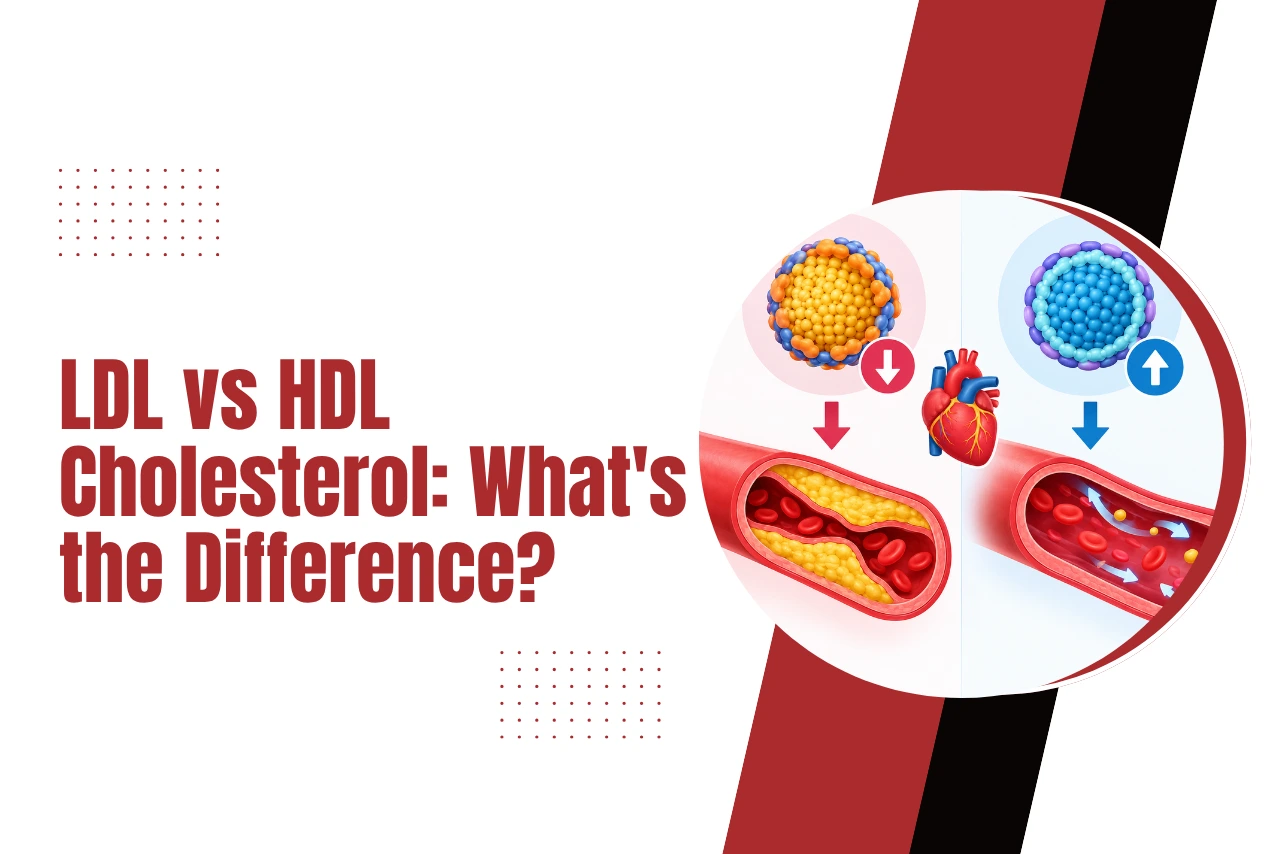
A lot of patients hear “high cholesterol” and assume the number on the report is the whole problem. It usually isn’t. What matters more is who’s carrying that cholesterol through the blood, and that’s where LDL and HDL come in. LDL, low-density lipoprotein, drops cholesterol off along the artery walls on its way through, and over years, that leftover buildup is what narrows and stiffens the arteries. HDL works backwards from that. It picks cholesterol back up off the artery walls and carries it to the liver to be broken down. One report, two completely different jobs happening underneath it.
According to Dr. Kiran Narang, a heart health specialist at Hridyarambh Clinic, “I’ve seen two patients walk in with identical total cholesterol numbers and leave with completely different treatment plans, because what that number was made of mattered more than the number itself.”
What Are LDL and HDL Cholesterol?
Both get lumped under “cholesterol” on a lab report, but they’re not doing the same job at all.
LDL, or low-density lipoprotein, carries cholesterol from the liver to cells throughout the body. When there’s too much LDL circulating, some of these particles can enter artery walls and contribute to plaque buildup over time.
HDL, high-density lipoprotein, is basically the return trip. It collects cholesterol sitting in arteries and tissue, then hauls it back to the liver for disposal.
Doctors call LDL “bad” not because cholesterol itself is dangerous, but because the buildup narrows arteries bit by bit. Nobody feels it happening until symptoms eventually catch up. HDL earns the “good” label for the opposite reason, a higher count usually means the body’s clearing mechanism is working harder, pulling back some of what LDL leaves behind.
This balance comes up a lot during Hypertension Treatment consultations too, mostly because patients with high LDL tend to also show elevated blood pressure. The two conditions rarely show up alone.
Want to know where your LDL and HDL numbers actually stand? Book Appointment
Want your cholesterol levels properly assessed?
How Does LDL vs HDL Affect Heart Health?
Here’s the thing about LDL vs HDL: it’s not really two separate stories. It’s one process, happening in two directions at once, inside the same artery
High LDL cholesterol:
Persistently high LDL can contribute to plaque buildup inside artery walls, gradually narrowing the space available for blood flow.
Low HDL cholesterol:
Lower HDL levels may reduce the body’s ability to transport excess cholesterol away from tissues and back to the liver for processing.
Combined heart risk:
High LDL and low HDL together can indicate a less favourable cholesterol profile and an increased risk of cardiovascular disease.
Lifestyle and treatment:
Dietary changes, regular physical activity and medication when prescribed can help improve cholesterol levels and reduce cardiovascular risk.
Know the warning signs: If you’re concerned about narrowed arteries, read our guide to 7 warning signs of a blocked artery to understand symptoms that may need medical attention.
Why Choose Dr. Kiran Narang for Cholesterol and Heart Health in Mumbai?
Dr. Kiran Narang trained at Topiwala National Medical College and BYL Nair Charitable Hospital in Mumbai, where he completed his MD in Internal Medicine, followed by a DM in Cardiology and Interventional Cardiology, and a DNB in Cardiology.Cholesterol management comes up in his consultations more often than most patients expect.
At Hridyarambh Clinic in Marol, Andheri East, that experience shows up in how LDL and HDL cholesterol are understood and managed early, helping reduce cardiovascular risk before it leads to serious heart-related complications.
FAQ’s
What is a healthy LDL to HDL ratio?
Doctors generally aim for LDL under 100 mg/dL and HDL above 40 in men, 50 in women. That said, these numbers alone don’t tell the whole story, family history and other markers still weigh in on actual risk.
Can diet alone improve LDL and HDL levels?
Honestly, more than most people assume. Cutting back on saturated fat and adding fiber to meals can shift both numbers in a noticeable way. Whether that’s enough on its own really depends on how high LDL was to begin with.
Does high HDL cancel out high LDL?
Not quite. It takes the edge off the risk, sure, but a high LDL reading still matters even when HDL looks strong. Think of it as a partial offset, not a fix.
How often should cholesterol levels be checked?
For most healthy adults, every 4 to 6 years is reasonable. That gap closes up fast though if there’s a family history of heart disease, diabetes, or cholesterol trouble already in the records.
References
- Biochemistry, LDL Cholesterol. StatPearls, NCBI Bookshelf. https://www.ncbi.nlm.nih.gov/books/NBK519561/
- Biochemistry, High Density Lipoprotein. StatPearls, NCBI Bookshelf. https://www.ncbi.nlm.nih.gov/books/NBK549802/
Disclaimer: This content is for educational purposes only and should not be considered a substitute for professional medical advice, diagnosis, or treatment.