
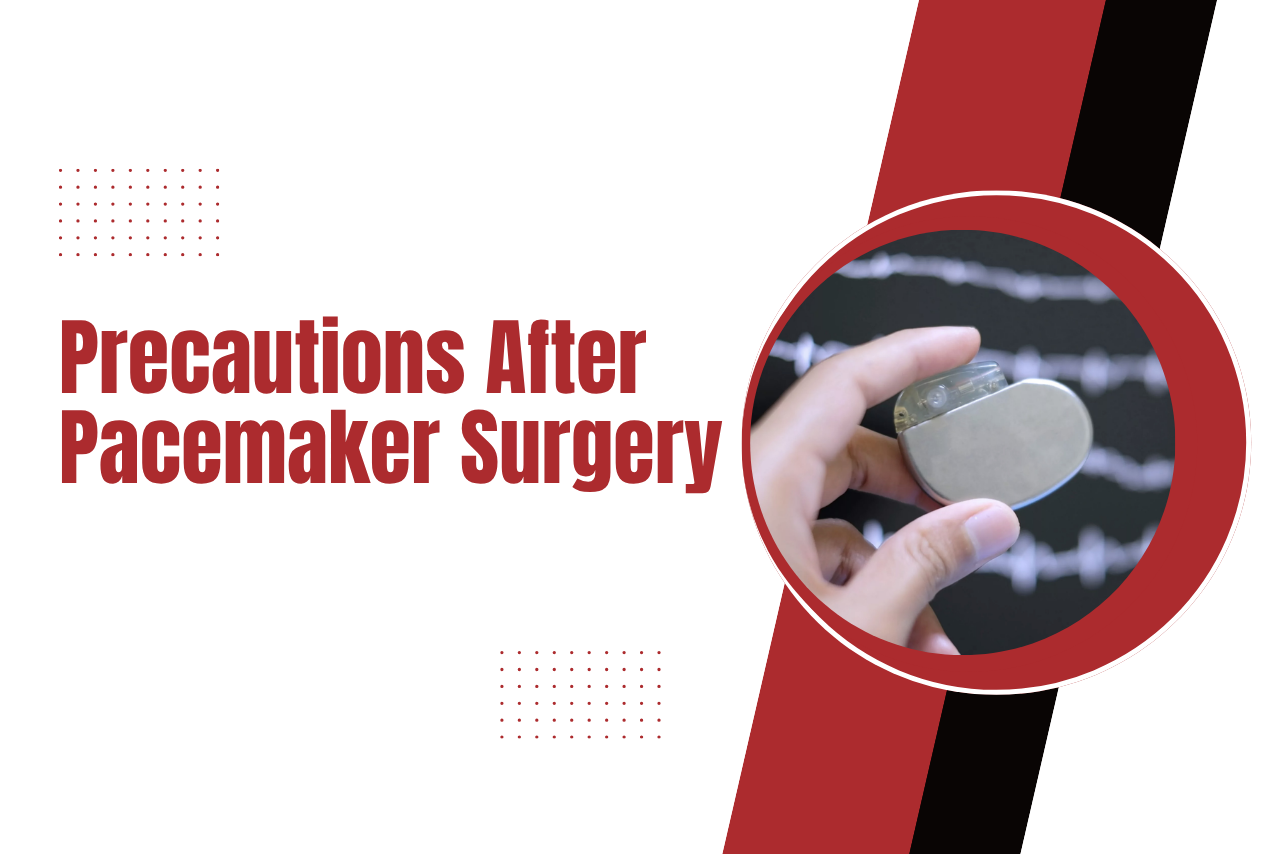
A pacemaker keeps your heart rhythm steady, but the first few weeks after implantation matter just as much as the device itself. Avoid lifting anything heavier than 10 pounds, keep the arm on the implant side below shoulder height, and hold off on driving for at least two weeks. Beyond that, the incision needs to stay clean and dry, and carrying your device ID card becomes a permanent habit, not a temporary one.
Dr. Kiran Narang, an experienced interventional cardiologist in Mumbai, says,”The device itself is reliable within days. What takes time is the pocket healing, the lead settling into position. Patients who ignore the arm restriction or go back to lifting too soon are the ones I see with lead displacement or pocket complications. Six weeks of caution prevents a second procedure most of the time.”
Precautions to Follow After Pacemaker Surgery?
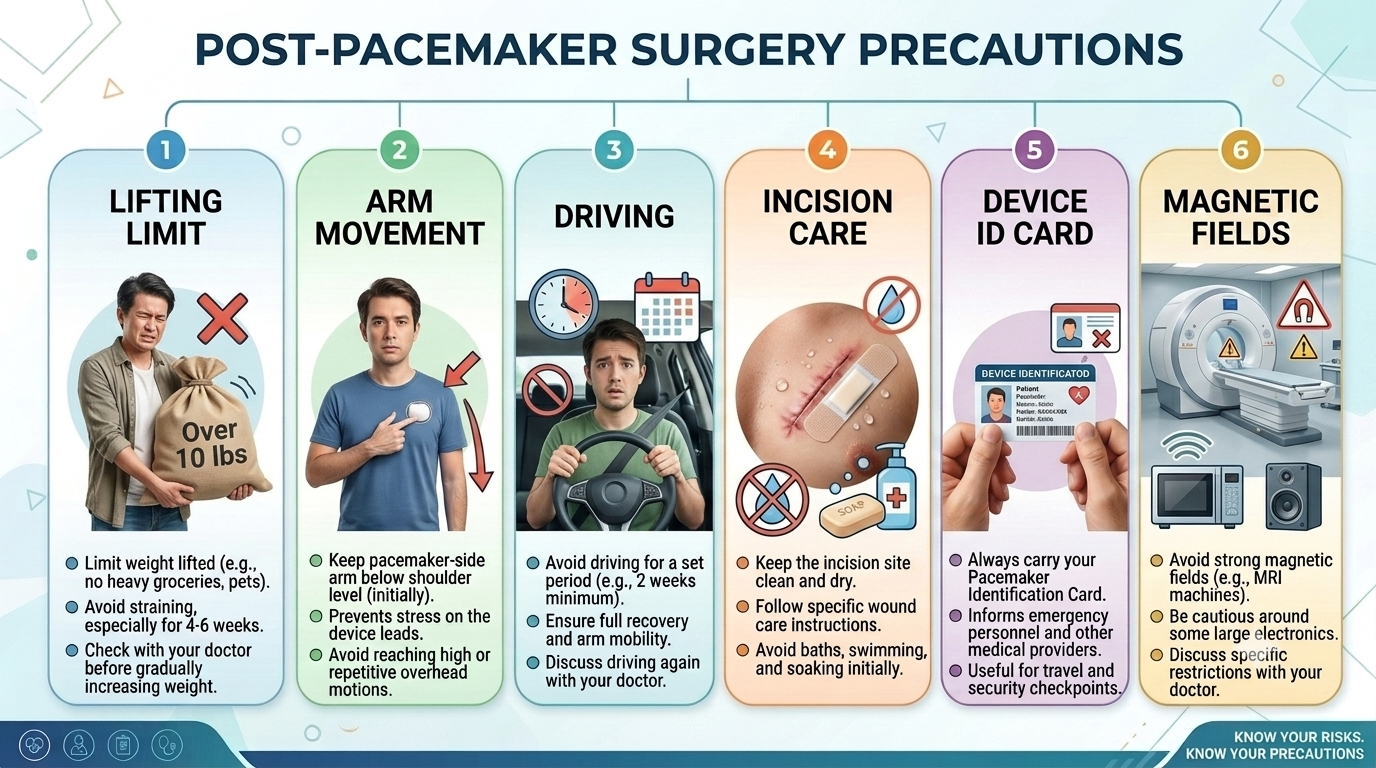
No lifting over 10 pounds: Anything heavier strains the pocket where the device sits, particularly in the first two to four weeks before the tissue has properly healed around it.
Keep the implant-side arm below shoulder height: Raising that arm too soon can dislodge the leads before they’ve settled into the heart muscle, which is one of the more common early complications.
Avoid driving for at least two weeks: Sudden movement, seatbelt pressure across the chest, or a hard brake can all disturb the incision site during this window.
Keep the incision clean and dry: Watch for redness, swelling, or discharge, any of these need a call to your cardiologist, not a wait-and-see approach.
Carry your device ID card at all times: Airport security, MRI scans, other medical procedures, this card is what tells other doctors and staff exactly what’s implanted and when.
Avoid strong magnetic fields and specific electronics: Certain industrial equipment and some electronic devices can interfere with pacemaker function if held too close for too long.
Pacemaker-related complications are relatively rare, but nearly all of them trace back to the recovery window being rushed. Following these precautions properly is what keeps that number low.
Who Needs to Be Extra Careful During Pacemaker Recovery?
Recovery isn’t identical for everyone. Certain patients need to be more cautious during those first few weeks than others.
Risk Factor | Risk Level | Extra Precaution Needed | Action Needed |
Diabetes | High | Slower wound healing | Extra incision monitoring |
Older adults (75+) | High | Higher fall and complication risk | Assisted mobility for 2 weeks |
Physically active or manual labour jobs | High | Repeated strain on implant site | Extended activity restriction |
Blood thinners | Moderate | Higher bleeding or bruising risk | Close incision follow-up |
Key groups that need particular attention:
Patients with diabetes: Wound healing is naturally slower, which extends the window where the incision site is vulnerable to infection or delayed closure.
Older adults: A fall or sudden movement during recovery carries higher risk of lead displacement, and balance can already be a concern in this age group.
People in physically demanding jobs: Manual labour, repeated lifting, or overhead work needs a longer return-to-work timeline than a desk job would require.
Anyone on blood thinners: The incision site bruises and bleeds more easily, which means closer monitoring in the first two weeks specifically.
Most pacemaker complications are preventable. They happen when recovery gets rushed, not when the device itself fails. If you’re also managing risk factors for coronary artery disease alongside your pacemaker, that combination needs closer monitoring during recovery too.
Why Choose Dr. Kiran Narang?
Dr. Kiran Narangis a leading interventional cardiologist in Mumbai with over 12 years in clinical medicine and 8+ years in cardiology. He has performed roughly 5,000 angiograms and 1,500 angioplasties, including complex multi-vessel cases and emergency interventions, alongside pacemaker and ICD implantation. His practice uses radial-access techniques where possible for faster recovery, follows ESC and ACC guidelines, and prioritises a calm, patient-first consultation style. Consultations are available at HBT Medical College and RN Cooper Hospital in Vile Parle, and at Hridyarambh Clinic in Andheri East.
Recently had pacemaker surgery and unsure what's safe?
FAQ’s
How long until I can lift my arm normally after pacemaker surgery?
Most patients can gradually resume normal arm movement after about four to six weeks, once the leads have settled and the pocket has healed. Your cardiologist will confirm this at your follow-up visit.
Can I use my phone or laptop with a pacemaker?
Yes, everyday electronics like phones and laptops are safe. The concern is mainly with strong industrial magnets or specific medical equipment, not normal household devices.
When can I go back to work after pacemaker implantation?
Desk-based work is often possible within a week. Physically demanding jobs typically need four to six weeks, depending on how much lifting or overhead movement the role involves.
Do I need to avoid airport security scanners?
No, but you should carry your device ID card and inform security staff before walking through metal detectors, since the device can occasionally trigger an alert.