
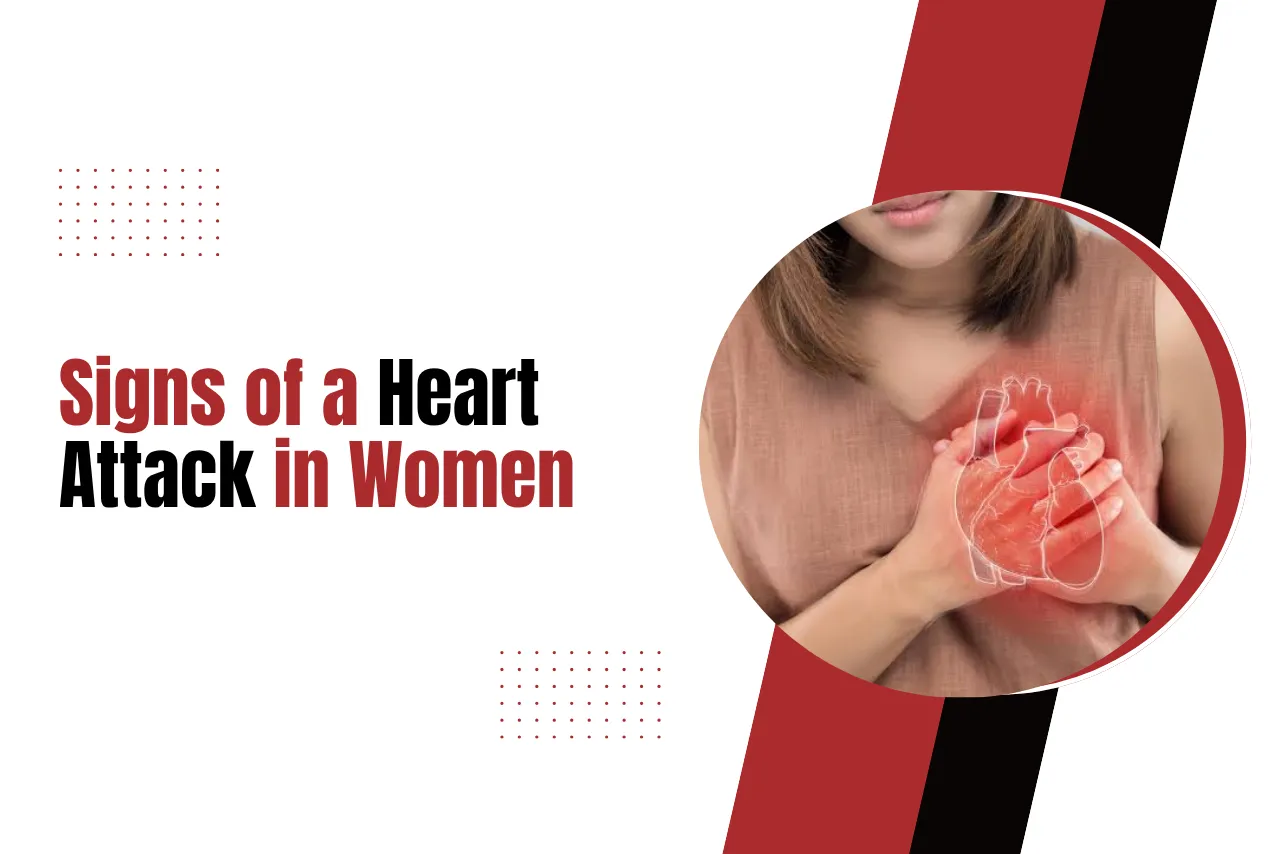
Most people picture a heart attack as someone clutching their chest. For women, it often doesn’t look like that at all. Chest discomfort or pressure still shows up, but so does breathlessness, unusual tiredness, nausea, cold sweats, pain in the back or jaw. Sometimes there’s barely any chest pain in the picture. That mismatch, between what people expect and what actually happens, is a big reason heart attacks in women tend to get caught later than they do in men.
According to Dr. Kiran Narang, an experienced interventional cardiologist in Mumbai, “A lot of the women I see afterward tell me they felt off for a day or two, tired in a way that didn’t make sense, some nausea, maybe pain between the shoulder blades, and none of it screamed heart attack. They went to work. They made dinner. By the time they came in, more heart muscle had been affected than if they’d come in on day one. The symptom list for women just doesn’t match what most of us were taught to look for.”
At Dr. Kiran Narang’s clinic in Marol, Andheri East, this comes up more than it should. So here’s the actual picture: what symptoms look like in women, why they get waved off, and when waiting stops being a reasonable option.
Why Heart Attack Symptoms in Women Are Different
Mechanically, it’s the same event either way, a blocked coronary artery cutting off blood flow to part of the heart muscle. What differs is how it announces itself. Women more often have blockages in smaller arteries, the kind that don’t always show up cleanly on a standard test. Hormones play a role too, and so does vessel size, both can change how pain signals actually register. And the timeline is usually slower. Instead of one dramatic moment, symptoms build over hours, sometimes days. Even the chest pain, when it happens, tends to feel more like pressure than the crushing pain everyone’s been trained to expect.
None of that makes it less dangerous. It just makes it easier to miss, for the woman experiencing it and occasionally for the doctor sitting across from her.
Common Signs of a Heart Attack in Women
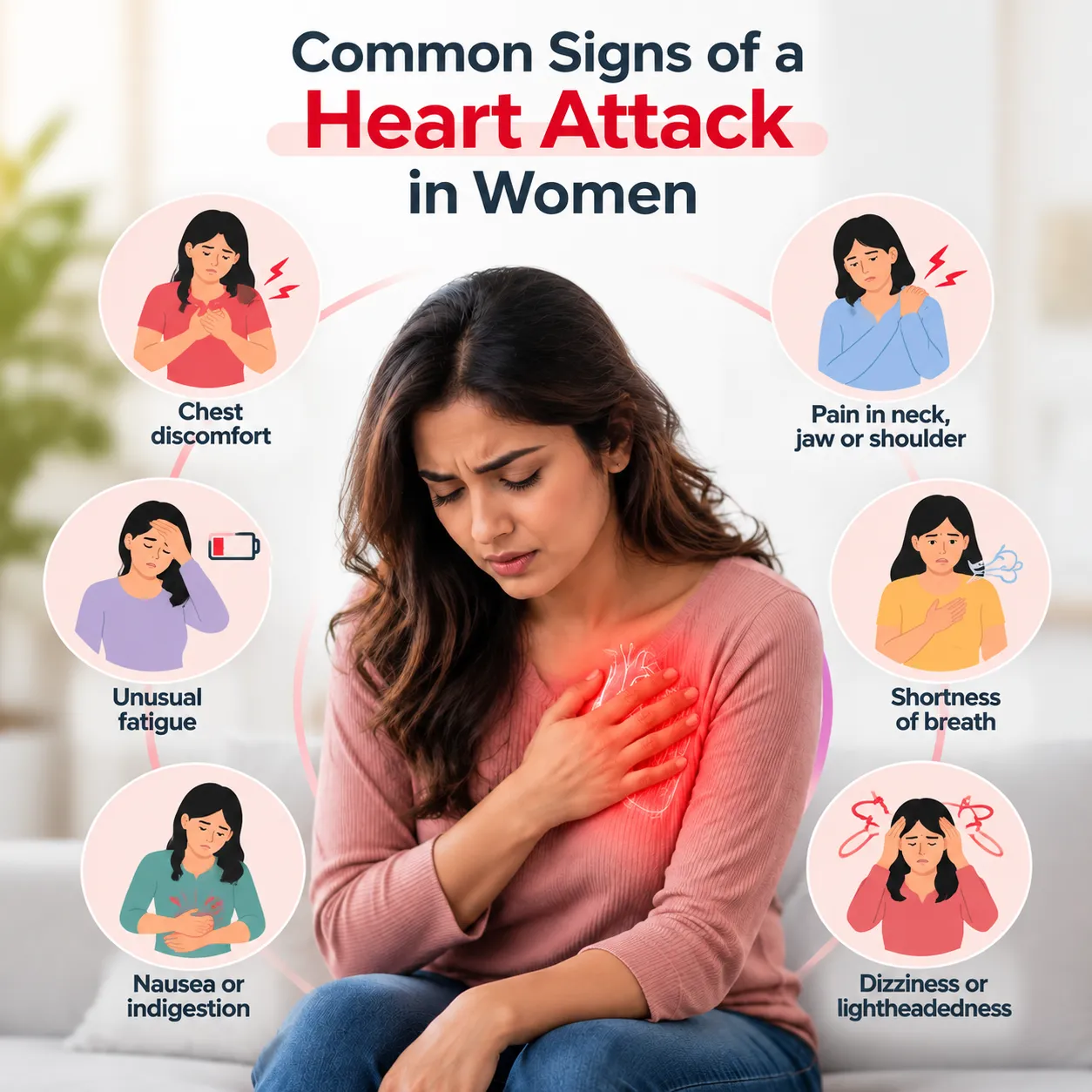
Chest pressure and tightness still top the list, though it’s often milder than the textbook version. Breathlessness is common too, sometimes it’s the only thing that shows up, with no chest involvement at all. Fatigue that comes out of nowhere and doesn’t match how much someone’s actually resting is another one worth paying attention to, and it can precede everything else by a day or more. Nausea gets mistaken for a stomach bug constantly. So does the cold sweat that shows up without any real trigger. Pain radiating into the back, neck, or jaw can be the entire symptom on its own, no chest pain required. Dizziness, lightheadedness, and discomfort down one or both arms round out the list.
Individually, almost every one of these has a dozen harmless explanations. That’s exactly the problem.
Symptoms That Often Get Mistaken for Something Else
Nausea and exhaustion get pinned on a stomach virus, or just being run down. Jaw and back pain get written off as dental trouble or bad posture. Breathlessness becomes anxiety, or being out of shape. Chest pressure turns into heartburn. Every one of these has an innocent explanation available, which is exactly why they slide by unexamined. If risk factors for heart disease are already in the picture, that easy explanation deserves a second look before anyone settles on it.
Risk Factors That Matter More for Women
Diabetes
pushes heart attack risk up more sharply in women than it does in men
Menopause
the drop in oestrogen is tied to a real rise in cardiovascular risk
Pregnancy complications
preeclampsia and gestational diabetes both carry higher long-term heart risk
Autoimmune conditions
lupus, rheumatoid arthritis, more common in women and linked to higher cardiovascular risk
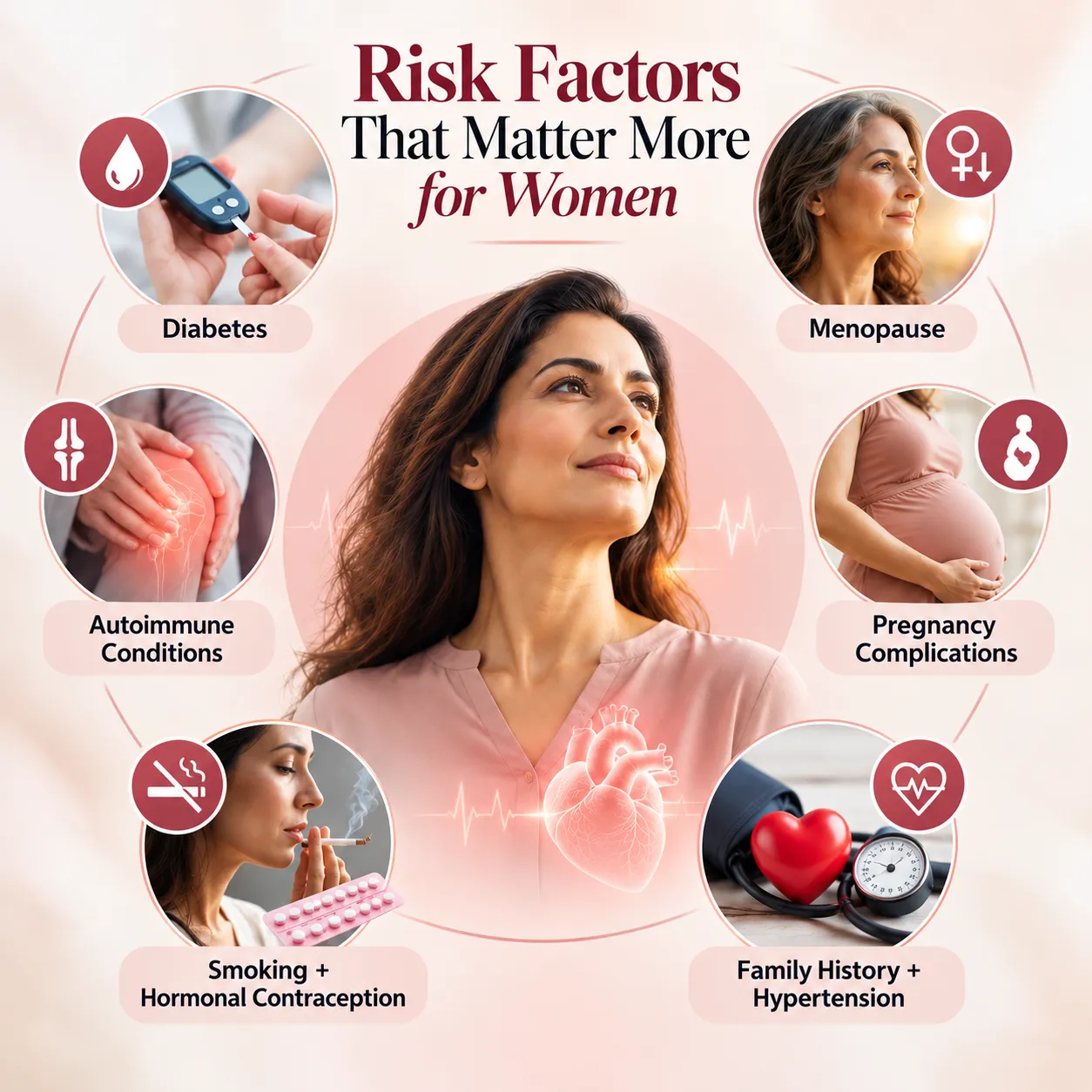
Smoking plus hormonal contraception
the combination does more damage than either one alone
Family history and hypertension
the usual suspects, still frequently under-screened for in women specifically
When Should You Seek Emergency Care?
Chest pressure that doesn’t let up with rest. Sudden breathlessness, especially with fatigue or nausea riding along. Jaw, neck, back, or arm pain that has no obvious cause. Cold sweats with dizziness. Or honestly, just a sense that something feels off in a way it normally doesn’t. Any of that is worth an ER visit, not a wait-and-see. Being told it wasn’t a heart attack is a far better outcome than finding out too late that it was.
How Heart Attacks Are Diagnosed and Treated in Women
The diagnostic process itself doesn’t change by gender. What should change is the willingness to test early, given how often the symptoms don’t match what’s expected. An ECG picks up the heart’s electrical activity and flags a current or past heart attack. Blood tests look for troponin, an enzyme that rises when heart muscle gets damaged. 2D echocardiography shows how well the heart is actually pumping. And coronary angiography maps exactly where a blockage sits and how bad it is.
Once a blockage is confirmed, angioplasty is often the next step, reopening the artery and getting blood flow going again. Medication and long-term risk management follow, blood pressure control included where it applies. None of this ends at discharge. Preventing a second event takes as much attention as treating the first.
Why Choose Dr. Kiran Narang for Cardiac Care in Mumbai
Over 12 years in clinical medicine, MBBS, MD, DM Cardiology, DNB Cardiology. Roughly 5,000 angiograms and 1,500 angioplasty procedures performed directly. ECG, 2D echocardiography, and angiography, all available at one clinic rather than scattered across referrals. A working habit of taking atypical symptoms seriously instead of assuming every case looks the same. Ongoing management of hypertension, diabetes, and the other risk factors that build toward these events in the first place. Treatment plans built around actual test results, not a template.
The clinic is at Hridyarambh Clinic, Vasant Oasis, Makwana Road, Marol, Andheri East, Mumbai.