
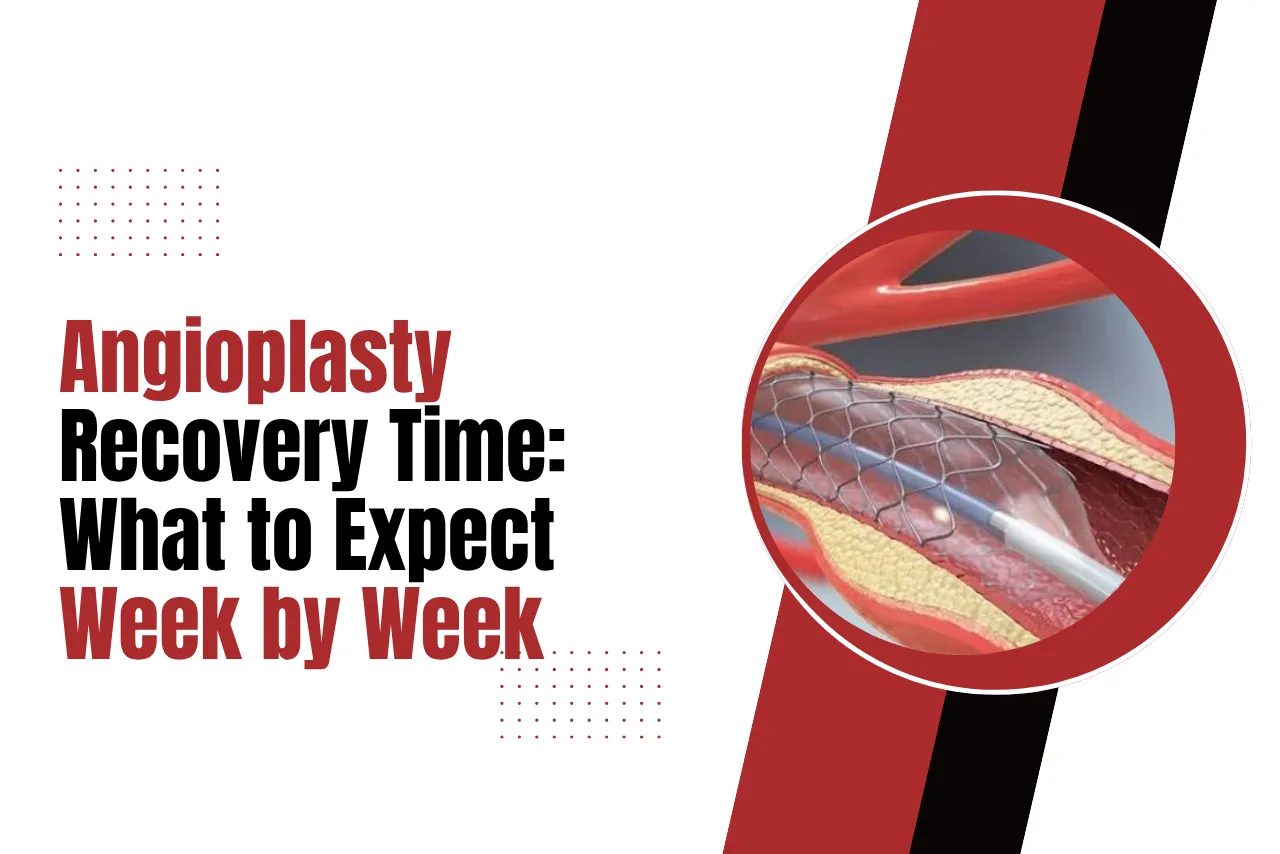
Most patients are back to their daily activities within about a week of angioplasty, though full recovery, meaning exercise, driving, and physically demanding work, usually takes closer to 2 to 4 weeks, and the exact number depends on whether the procedure went through the wrist or the groin, whether it was planned in advance or done urgently, and how the heart is functioning afterward.
At Dr. Kiran Narang’s clinic in Marol, Andheri East, recovery guidance is tailored to each patient rather than handed out as a generic printout, since access site, stent type, and underlying heart function all affect how quickly someone gets back to normal. This article covers what recovery from angioplasty actually looks like, week by week.
What Happens Immediately After Angioplasty
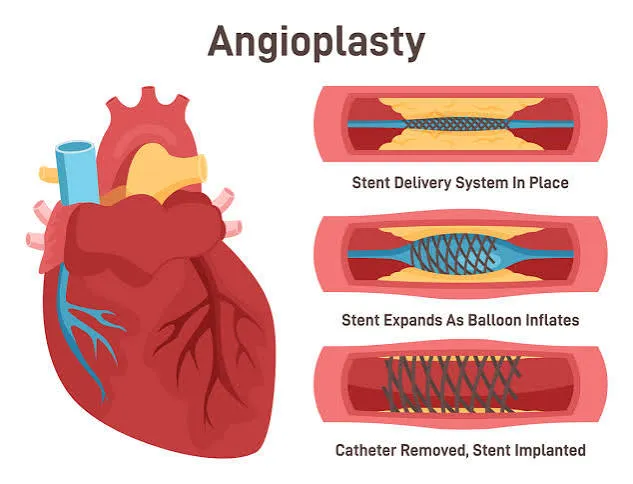
Most elective angioplasty procedures are carried out under local anaesthesia with light sedation, so the patient stays awake through the whole thing, and once the stent is in place, the next stop is a recovery area where the team keeps an eye on vitals and the puncture site for a few hours. Patients who had radial, or wrist, access are often able to sit up and start walking within a couple of hours, since the artery there is smaller and easier to seal. Femoral, or groin, access takes longer to settle, and several hours of bed rest are usually needed before the puncture site can be trusted to hold. Discharge generally happens within 24 to 48 hours of the procedure, and for straightforward radial cases, some patients even go home the same day.
Angioplasty Recovery Timeline: Day by Day
| Timeframe | What to Expect | Activity Guidance |
| Day 1 (procedure day) | Monitoring in hospital, access site checked for bleeding | Bed rest for femoral access; radial patients may walk within hours |
| Days 2–3 | Discharge home, mild soreness or bruising at access site | Light walking, avoid strain on the access-site limb |
| Week 1 | Puncture site healing, energy levels improving | Avoid heavy lifting, driving may resume once cleared by the doctor |
| Weeks 2–4 | Access site fully healed in most cases | Gradual return to normal activity, light exercise, and desk-based work |
| 4+ weeks | Recovery largely complete for most patients | Structured cardiac rehab and return to full exercise, guided by follow-up testing |
Recovery that deviates significantly from this pattern, especially ongoing pain, swelling, or reduced stamina beyond four weeks, should be discussed with a cardiologist rather than assumed to be normal.
Wrist (Radial) vs Groin (Femoral) Angioplasty: Recovery Differences
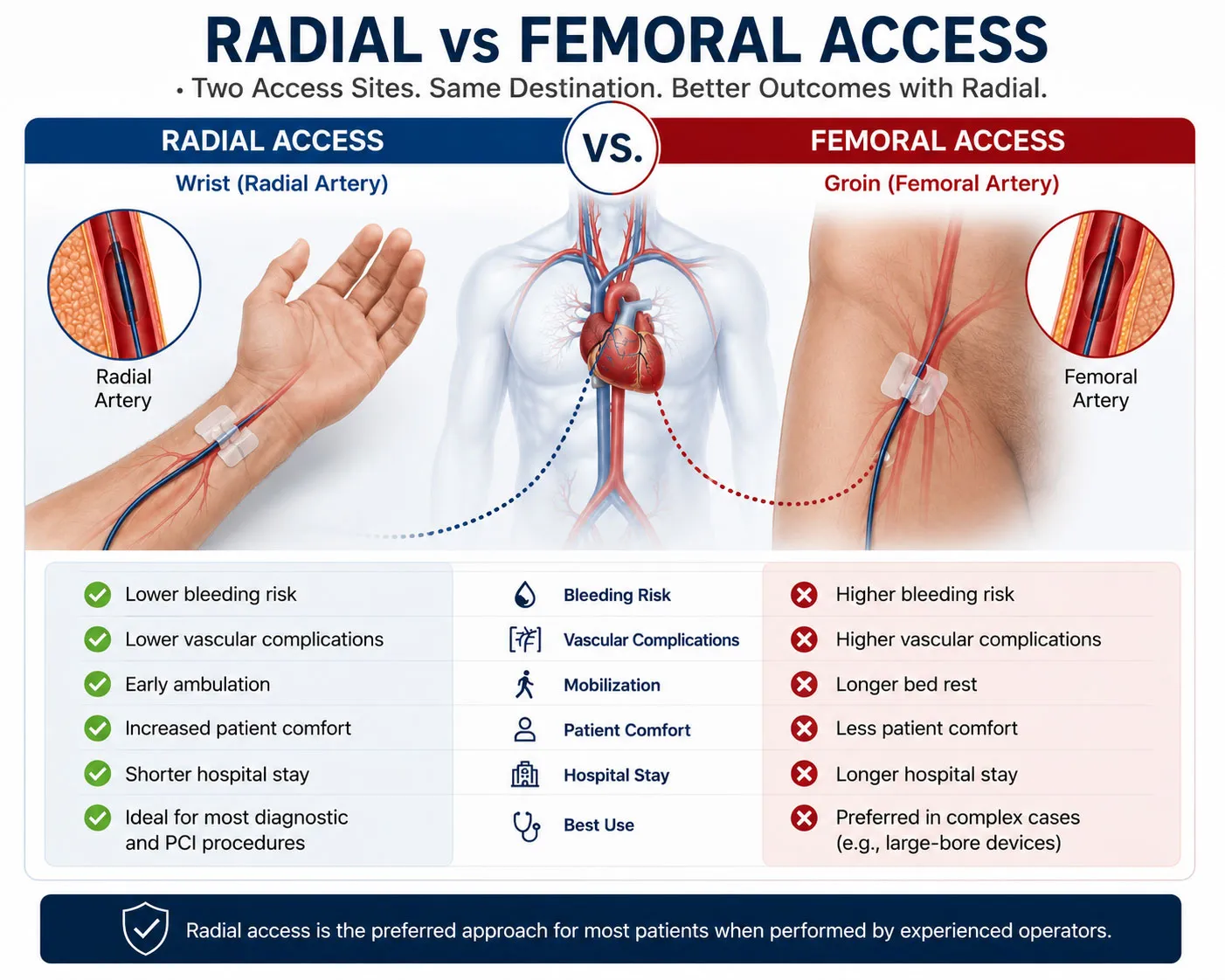
The access site used has a real effect on how recovery feels. Radial access, entering through the wrist, generally allows patients to sit up, walk, and eat within a few hours of the procedure, with a much lower risk of bleeding complications. Most people return to light daily activity within a day or two, though the wrist itself may feel tender or bruised for about a week.
Femoral access, entering through the groin, requires several hours of bed rest immediately after the procedure to let the artery seal, and carries a higher risk of bleeding or bruising at the site. Patients are generally advised to avoid heavy lifting, strenuous activity, and prolonged standing for about a week to ten days. Where clinically appropriate, a radial-first approach is generally preferred for exactly this reason, faster mobilisation and a more comfortable recovery.
Activity Restrictions During Recovery
Specific guidance varies by patient, but the following general timelines apply to most people recovering from angioplasty:
- Driving: Usually avoided for 24 to 48 hours after radial access, or several days after femoral access, until the doctor confirms the site has healed and reflexes are unaffected by sedation.
- Lifting: Avoid lifting more than 4 to 5 kg for about a week, particularly on the side of the access site.
- Walking and light activity: Encouraged from the first day or two, gradually increasing as energy returns.
- Exercise and gym activity: Typically restricted for at least 1 to 2 weeks, with a gradual, supervised return afterward rather than jumping back into a previous routine.
- Sexual activity: Generally safe to resume after about a week, once the access site has healed and there is no chest discomfort with mild exertion.
- Air travel: Usually fine after a few days for routine domestic travel, though longer flights are often deferred until the first follow-up visit confirms stable recovery.
- Bathing: Showering is typically fine after 24 hours, but soaking the access site (baths, swimming) is usually avoided for about a week.
Medications and Diet After Angioplasty
Most patients are prescribed dual antiplatelet therapy, usually aspirin combined with a second antiplatelet such as clopidogrel or ticagrelor, for a period ranging from six months to a year depending on the type of stent used and individual bleeding risk. This medication is not optional or flexible: stopping it early significantly raises the risk of the stent clotting. Statins and blood pressure medication are also commonly continued or started, particularly where hypertension was a contributing factor to the original blockage.
Diet in the weeks that follow generally moves toward something lower in sodium and saturated fat, built more around vegetables, whole grains, and lean protein, and this matters less as a short-term restriction and more as the long-term pattern that actually keeps new blockages from forming down the line.
Warning Signs During Recovery You Shouldn't Ignore
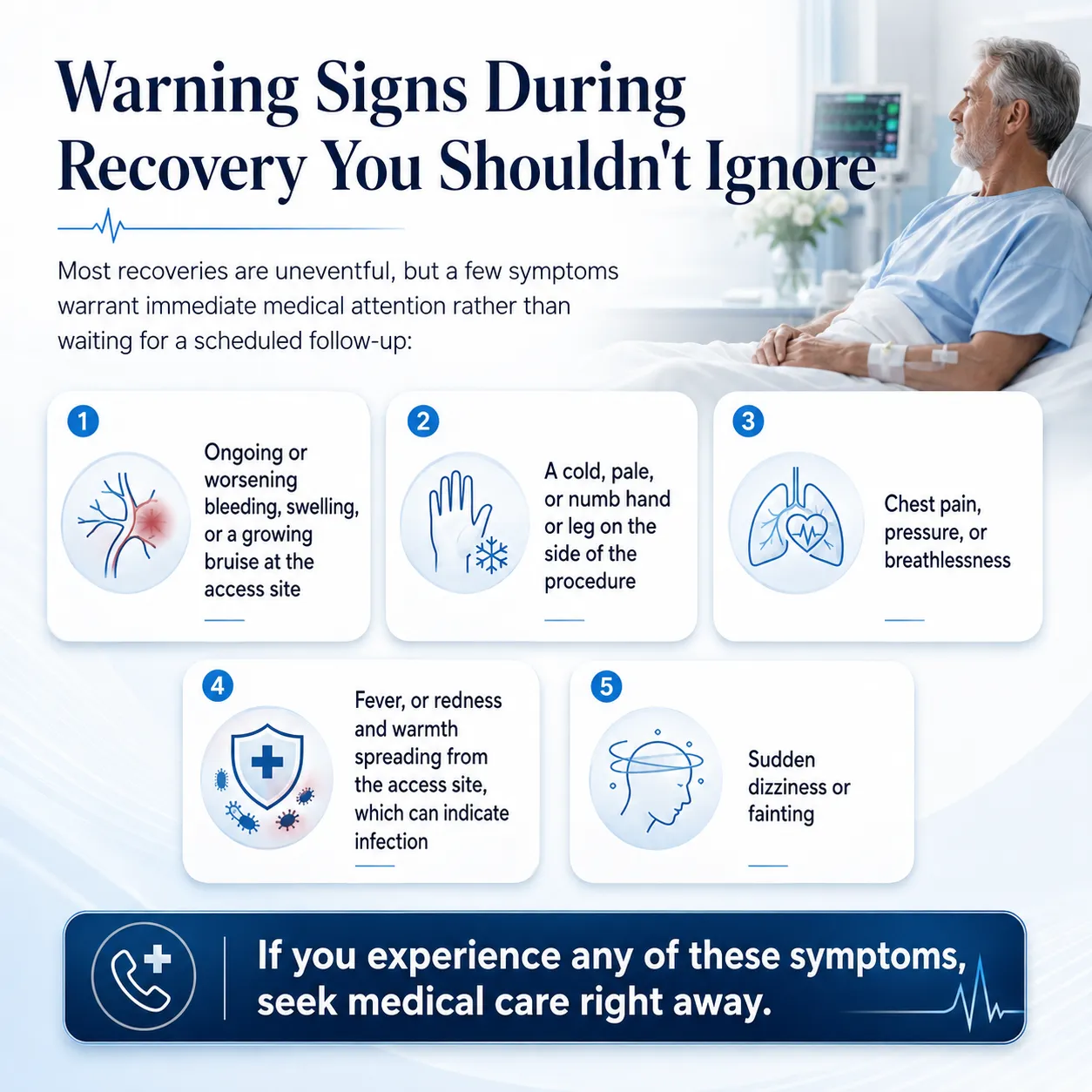
Most recoveries are uneventful, but a few symptoms warrant immediate medical attention rather than waiting for a scheduled follow-up:
- Ongoing or worsening bleeding, swelling, or a growing bruise at the access site
- A cold, pale, or numb hand or leg on the side of the procedure
- Chest pain, pressure, or breathlessness
- Fever, or redness and warmth spreading from the access site, which can indicate infection
- Sudden dizziness or fainting
Any of these should prompt a call to the clinic or a visit to the nearest emergency department without delay.
When Can You Return to Exercise, Work, and Normal Life?
Return-to-work timelines depend heavily on the type of work involved. Desk-based or low-activity jobs are usually resumed within 3 to 7 days. Physically demanding work, including manual labour or jobs requiring heavy lifting, generally needs 2 to 4 weeks, sometimes longer depending on how the procedure went and any underlying heart function issues.
Exercise is reintroduced gradually rather than all at once. Light walking typically starts within the first few days, with more structured activity added over the following weeks under medical guidance, often through a formal cardiac rehabilitation program. A follow-up 2D echocardiogram or stress test is commonly used to confirm the heart is tolerating increased activity before clearing a patient for a full return to their previous exercise routine. If hypertension contributed to the original blockage, understanding how blood pressure is managed over the long term is a useful next step for preventing further procedures down the line.
Why Choose Dr. Kiran Narang for Angioplasty Care in Mumbai?
Dr. Narang is an interventional cardiologist with over 12 years in clinical medicine (MBBS, MD, DM Cardiology, DNB Cardiology), and has performed roughly 1,500 angioplasty procedures, with a radial-first approach used wherever clinically appropriate to support faster, more comfortable recovery. Treatment decisions, including stent selection and antiplatelet duration, follow current ESC, ACC, and CSI guidelines. Follow-up care includes ECG and 2D echocardiography at the same clinic, so recovery is tracked without delays between appointments. The clinic is located at Hridyarambh Clinic, Vasant Oasis, Makwana Road, Marol, Andheri East, Mumbai.
Book a follow-up or consultation with Dr. Kiran Narang if recovery isn’t progressing as expected, or if you’re preparing for an upcoming angioplasty and want a clear sense of what to expect.
FAQ’s
How long until I can walk normally after angioplasty?
Most patients walk comfortably within a few days, sooner with radial access than femoral.
Can I climb stairs after angioplasty?
Yes, in moderation, from the first few days, gradually increasing as energy returns.
How long do I need to avoid lifting heavy objects?
Generally about a week, longer if femoral access was used or if there were any complications.
When can I go back to the gym after angioplasty?
Usually not before 1 to 2 weeks, and only with medical clearance and a gradual, supervised return.
Is it normal to feel tired for weeks after angioplasty?
Mild fatigue for one to two weeks is common. Fatigue lasting well beyond that should be discussed with a cardiologist.